95% OF
THE WORLD'S RHINOS HAVE BEEN LOST IN THE PAST 40 YEARS
Background
The rhino has existed on earth for
over 50 million years. As mega-grazers, rhinos have a critical impact on
the ecosystem - by clearing vegetation, maintaining grasslands, reducing fire
hazards, fertilizing soil, and dispersing and germinating seeds. A mature
rhino has no natural predator - except for humans.
Rhino horns are used in traditional
Chinese medicine believed to cure fevers, headaches, skin diseases, heart and
liver trouble, and verility - though most experts question the efficacy.
In Vietnam, rhino horn is believed to help improve sexual competency,
relieve fever, protect from evil spirits, and even be a magical cure for cancer
- none of which has been proven by modern medical research.
In 1975, the first international
ban on the commercial trade in rhino products was enacted, though some
countries still allow trade in live rhinos and trophy hunting. In 1993,
the Chinese government banned the trade and use of rhino parts but rapidly
growing economies fuel demand for rhino horn in Asia. Most horns leave
Africa for China and Vietnam, the biggest markets for rhino products. A
single horn can fetch as much as $200,000 USD.
Poaching is one of the greatest
threats to their survival. Rhinos are killed for their horns, which are
made of keratin (the same material as your hair and nails).
Today, only 5% rhino species remain
and all are listed as endangered or vulnerable. 2/3 of the world's rhinos
live in South Africa, the poaching epicentre of the world. According to
the South African Department of Environmental Affairs, a total number of 668
rhinos were poached in 2012 - almost two a day, on average.
If poaching continues at current rates, rhino populations will
become unsustainable and even more species will be lost to extinction.
What is the movement all about?
Via our public service
announcements, SRP movement is working
to educate consumers, youth and reduce the demand for rhino horns worldwide.
Addressing the demand for rhino products is fundamental to ensure the
rhino's survival.
SRP is developing a multi-faceted
political/consumer awareness campaign in partnership Endanged Wildlife Trust (EWT) and Johannesburg Zoo, while looking to
provide some emergency support to law enforcement efforts in South and East
African countries. The movement is set to launch this year while targeting markets in China and Vietnam, specifically.
About Us
We are all in this together – and we are glad you are visiting our site. This is our online meeting place, where we organize our activities, share ideas, and publicize our mission
Our Work
We work together to make our cause known, to reach out to other groups who share our vision. Whether you’re ready to lend a hand at one of our activities or have photos or articles to share about a recent event, here’s the place to do it.
RHINO
•Kingdom- Animolia
•Phylum-
Chordata
•Class
–Mammalia
•Family-
Rhinocerotide.
•Genres-
Ceratotherum,
Dicerorhins,Diceros,Rhinoceros.
TYPES OF RHINOS
•White
Rhinoceros-{Ceratotherium Simum}
•Sumatran
Rhinoceros or Asian Two –Horned Rhinoceros-{ Dicerorhinus Sumatrensis}
•Black
Rhinoceros or Hook- lipped Rhinoceros- {Diceros
Bicorns } Ceratotherium
•Iavan Rhinoceros Asian
Lesser-One horned Rhinoceros- { Rhinoceros Sonduicis}
•Indian
Rhinoceros-Great one –horned Rhinoceros-{Rhinoceros unicornis}
• Northern White Rhinoceros- {Ceratotherium Simum Cottoni}
•Southern
White Rhinoceros {Ceratotherium Simum Simum }
•Eastern
Black Rhinoceros- {{Diceros Bicornis Michaeli }
•Southern
Central Black Rhinoceros- {{Diceros Bicornis Miner }
•Southern
Western African Black Rhinoceros-{Diceros
Bicornis Bicornis }
•Western
Black Rhinoceros- {Diceros Bicornis longipes}
PURPOSE OF RHINOS ( VALUE )
•Wildlife .Tourism
•Existence
Value - animal rights
•Ecological
Value - maintaining ecosystem.
•Labels
for Companies- e.g. Eco unlimited.
IT'S NATURE
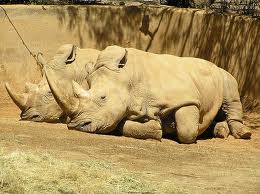
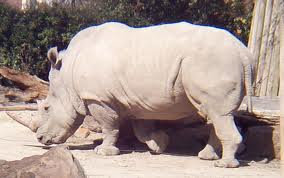
White Rhinoceros- Square -lipped Rhinoceros.
In the 20th century it was almost extinct ,its number was 50 individual in South Africa, in KwaZulu Natal, but today the number has risen above 11000 of these species.
They live in group of a dozen.
They communicate by touching usually by rubbing against each other when they are in a friendly mood.
They prefer grassland and savannah woodlands because of peacefulness.
They have a hump on the back of its neck and a proportionately larger head.
They love a good scratch and rubbing themselves on the tree stump ,rock or termite hill that will get polished with years.
•Black
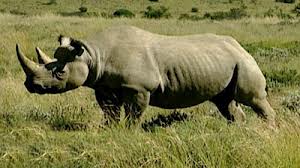
Rhinoceros –Hook- lipped rhinoceros.
•Their
pointy upper lip is triangular and sticks out beyond their lower lip.
•They
prefer dense , woody vegetarian, but can
live in a variety of habitants
•They
are completely grey.
•They
love to be in waterholes and to coat themselves with mud such that they keep
cool.
•They
love to use the same waterholes to drink water (fresh) , and this gives the
poachers a chance to kill them because they can be easily be targeted.
•They
are so much endangered and now there are 3000 left in the natural habitants.
•They
have a gestation period of 15-16 months.
•Calves
suckle for about a year but grazing after a few weeks.
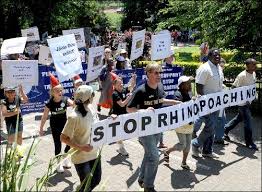
REASON FOR THE CAMPAIGN
•To
stop rhino pouching
•To
encourage continued public awareness and support for rhinos in South and East
Africa.
•To
reflect people’s perspective about Rhino pouching .
•To
seek information about rhinos and report all the notorious habits done on these
species in South and East of Africa.
•To
encourage financial aid from corporate and private donor to increase rhino
protection in South and East Africa.
•To
interlink the Rhino Conserve Centres on the
South and East African land.
•To
supply all the information regarding rhino protection and conservation across
the world.
•To
monitor and eradicate the trading of rhino horns in the far East.
•To
preserve the animal rights such that the rhinos must not be killed.
How
will This Campaign be Done
•Putting
in place billboards or posters along the way where I am going to be travelling , which will be showing that rhino killing is illegal and a bad act.
•Visiting
schools and vocational centers to inform students on protecting and conserving
these precious wild species.
•Though
informing people that animals also have a right to live.
•Through
giving people the information about Rhinos and why are they being killed or
poached.
•Through
informing people about the values of Rhinos, in both public and private sector.
•Through
informing people on how are benefiting from rhinos.
•Through
visiting all the Rhinos Sanctuaries in the mentioned countries, which will
encourage all countries s to unite and protect all rhinos as one.
Visiting
Main Rhino Centers OR
Rhino Reserves in These Countries:
•South
Africa
Hluhluwe Imfolozi Park
Location: KwaZulu Natal Province.
{
Ezemvelo K.Z.N Wildlife.}
•Botswana
•Zimbabwe
Dambari
Wildlife Trust, based in Bulawayo working in
Hwange National Park. Matopos National
Park.
Kyle National Park.
•Zambia
North Luangwa National.
{Frankfurt
Zoological Society}
•Tanzania
Mkomazi
Rhino Sanctuary.
Location: Mkomazi
National Park the 3270km Mkomazi National Park
forms the Southern extension of the
Tsavo Ecosystem into the Eastern Tanzania and together with
Tsavo National Park In Kenya, it forms one of the
largest protected areas in Africa.
•Kenya
Kenya
Association of Private Land Rhino Sanctuaries.
Location: Laikipia District ,just North of mount Kenya and straddling the Equator but also in the area to the
west of Chyulu Hills { Kenya Wildlife Services}
•Uganda
Ziwa Rhino Sanctuary.
The final Destination of the Campaign , located in Central Uganda and it keeps
Black and Whit Rhinos , it’s a 5 Hour Drive from the C.B.D of Kampala. Uganda.
Target
Audience
•To
the people of Africa.
•To
the private sector
•To
the public sector.
•To
the students in general.